News
LARA Project - A prototype of robot-assisted surgery using a femtosecond laser
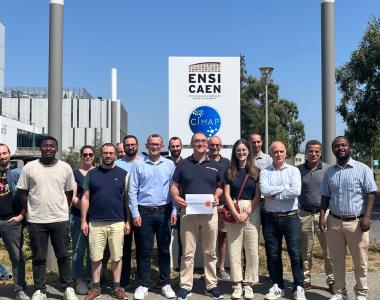
The LARA project, funded by the Région Nouvelle-Aquitaine, was carried out over more than three years with the objetive of developing a prototype for robot-assisted surgery using a femtosecond laser. During the project's closing event, partners et stakeholders were able to discover the technological advancements and attend live demonstrations, highlighting the results achieved and the future potential of this innovation in the medical field.

Femtosecond laser for precision maxillofacial surgery
In the field of maxillofacial surgery, bone cutting requires a high level of precision, particularly in complex anatomical areas. Traditional mechanical instruments (such as saws and drills) have limitations in terms of precision, accessibility, and preservation of surrounding tissues. Meanwhile, recent advances in femtosecond lasers, medical robotics, and 3D surgical planning offer new opportunities to improve the accuracy and reproducibility of surgical procedures.
In this context, the LARA project (LAser Robotic Applications) was launched to combine these technologies in order to enhance the precision and safety of bone surgery, particularly in the craniofacial region. The objective was to develop a robotic system prototype using a femtosecond laser to perform bone cutting based on 3D surgical planning, with real-time monitoring and control of the procedure.
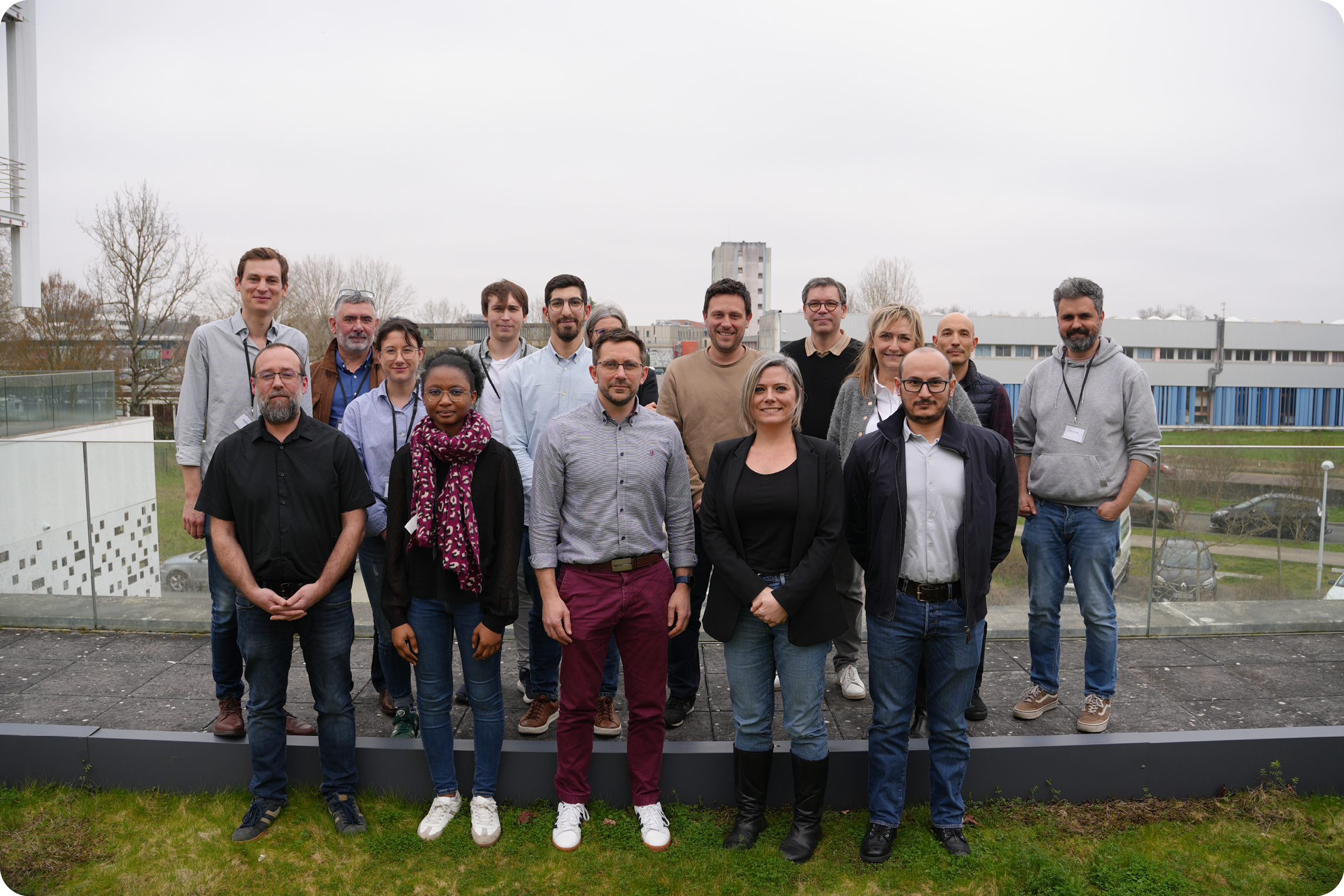
The project was carried out by a consortium coordinated by ALPhANOV, bringing together the CHU de Bordeaux, Pprime Institute, and Tecnalia France, each contributing complementary expertise in laser technology, robotics, imaging and medicine.
DISCOVER THE ROLE OF EACH PARTNER
IN THE PROJECT
From needs analysis to a functional prototype
The project was carried out in several main phases:
- The first phase consisted of analyzing surgical needs in order to define the system scope, its architecture, and the workflow, from trajectory planning to laser cutting;
- The second phase focused on the development of the technological building blocks, including the robot, the laser, as well as scanning and motion tracking system;
- The third phase involved the integration of the prototype and the first cutting tests on animal bone tissue, highlighting the initial limitations of the system;
- Finally, a validation phase was conducted in a clinical environment on anatomical specimens, with the support of surgeons, to assess the accuracy safety, and feasibility of the device.
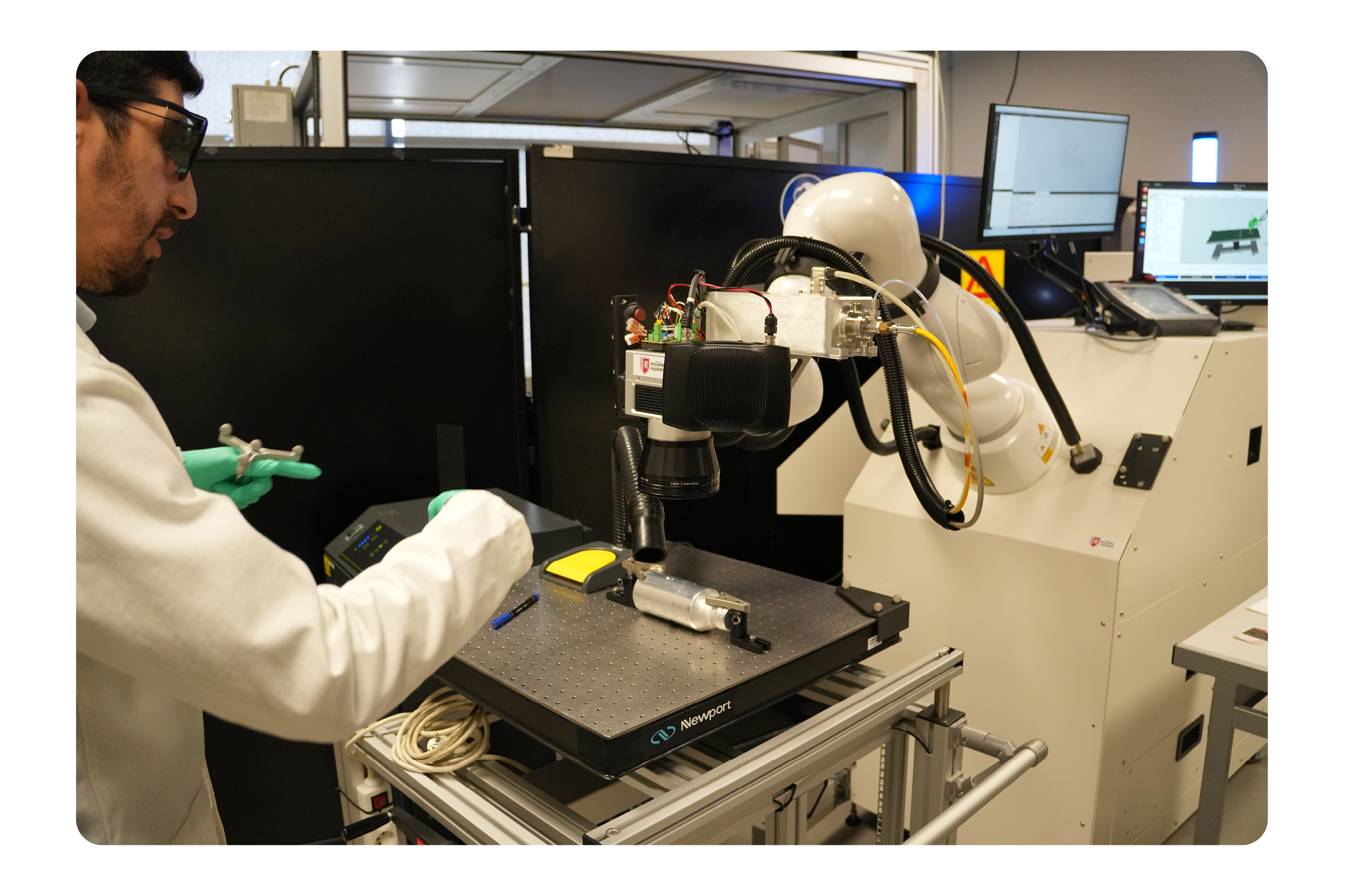
These different phases led to the development of a functional prototype demonstrating the ability of the femtosecond laser to perform precise bone cuts while preserving the surrounding tissues. However, the system is still at an experimental prototype stage, and further optimizations are required, particularly in terms of cutting speed.
The project also highlights several technological integration challenges and underscores the importance of close collaboration between engineers and surgeons in the development of innovative biomedical solutions.
Toward next-generation robotic surgical systems
The LARA project opens up significant opportunities for the development of next-generation robotic surgical systems. This technology could lead to the emergence of a new class of laser-based surgical robots and find applications in other medical fields such as hand surgery, dental surgery, and neurosurgery.
The project therefore provides a strong foundation for future technological developments, and industrial collaborations in the fields of photonics and robotics. For ALPhANOV, it also enables the organization to leverage the expertise gained in other strategic markets and applications, such as aerospace and industry 5.0, and to strengthen its involvement in European and industrial projects combining photonics and robotics.

Funding: