News
Inside IOA Open Days: Discovering the world of science
As part of the Fête de la Science, ALPhANOV and the Institut d'Optique Graduate School (IOGS) joined forces to host the second edition of the "Inside IOA" Open Days from October 8 to 10, 2026, at the Institut d'Optique d'Aquitaine (IOA).
Through this event, the two organizations once again teamed up to showcase photonics from every angle: its career opportunities, educational programs, and wide range of scientific and industrial applications.
Three days to explore photonics
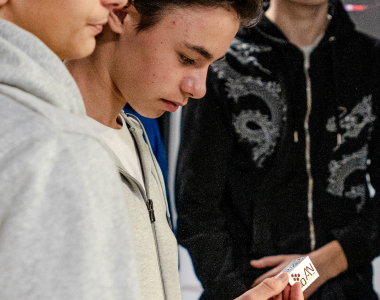
This year's Open Days welcomed more than 170 participants, including teachers, parents, and students, who came to discover optical and photonic technologies and the opportunities they offer.
Students began their visit with an introduction to the fundamental principles of photonics, helping them better understand technologies such as lasers and fiber optics before taking part in hands-on workshops. The tour continued with a behind-the-scenes look at the laboratories of ALPhANOV and the Laboratoire Photonique Numérique et Nanosciences (LP2N), where students were able to explore the research and development activities carried out at IOA an learn about the careers that drive scientific research and innovation.
The visits were organized around five workshops, giving participants the opportunity to explore many facets of photonics, from its fundamental principles to its practical applications.
|
|
 |
|
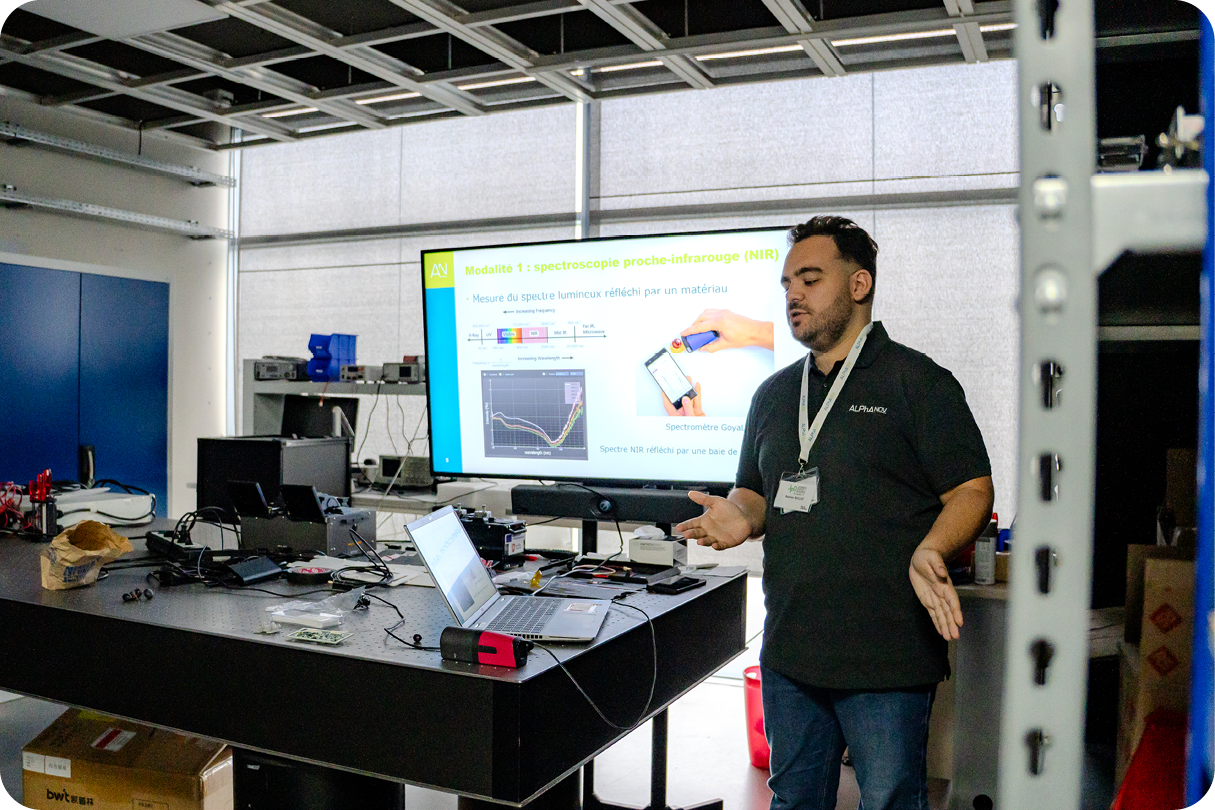 |
Supported by the région Nouvelle-Aquitaine, the CALICE project aims to develop an all-in-one, handheld photonic sensor capable of assessing the overall technological and phenolic potential of grapes directly in the vineyard. Visitors were able to watch a demonstration of the sensor using fluorescence technology.
|
|
|
 |
|
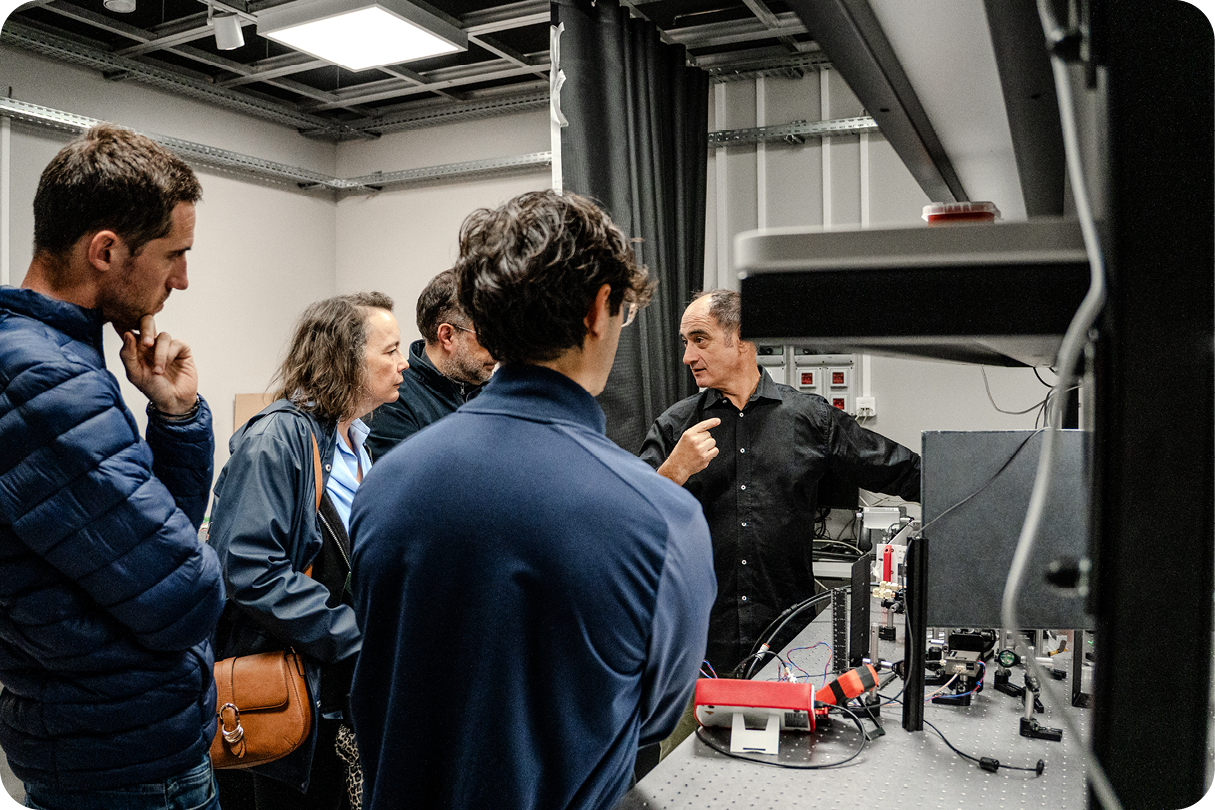 |
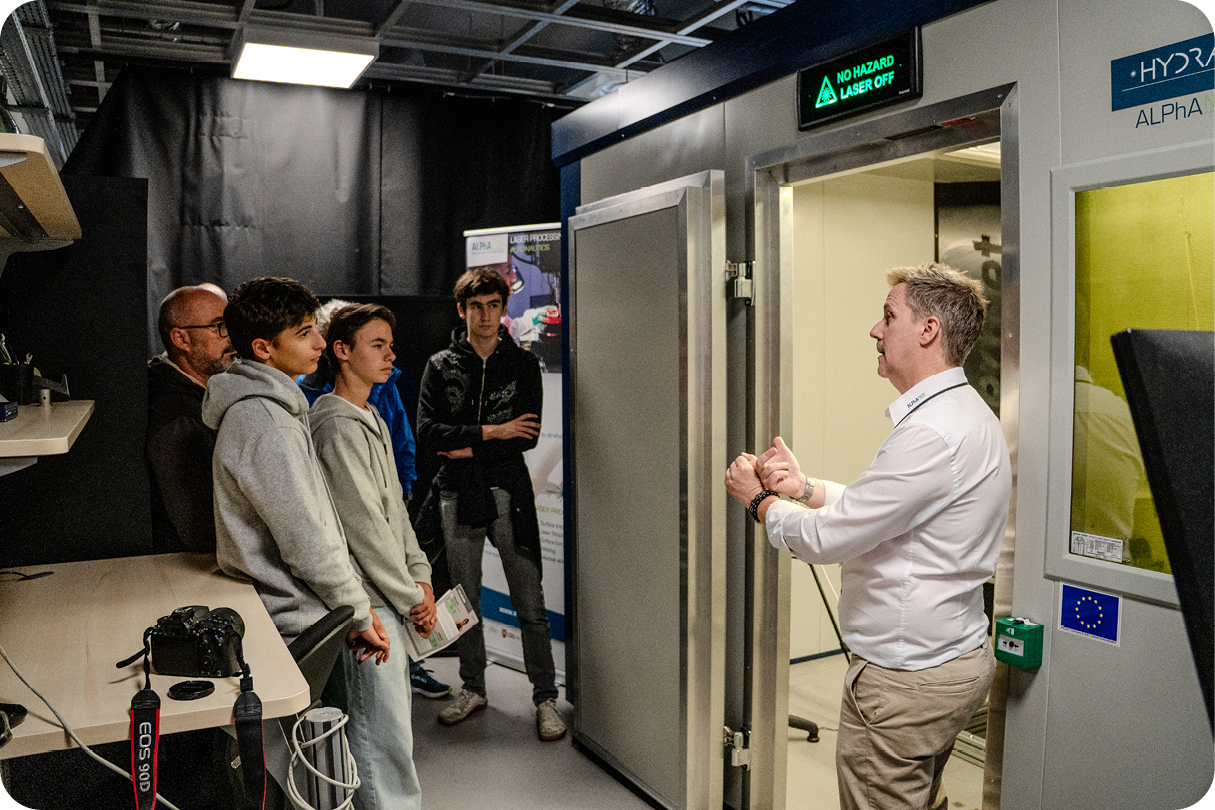
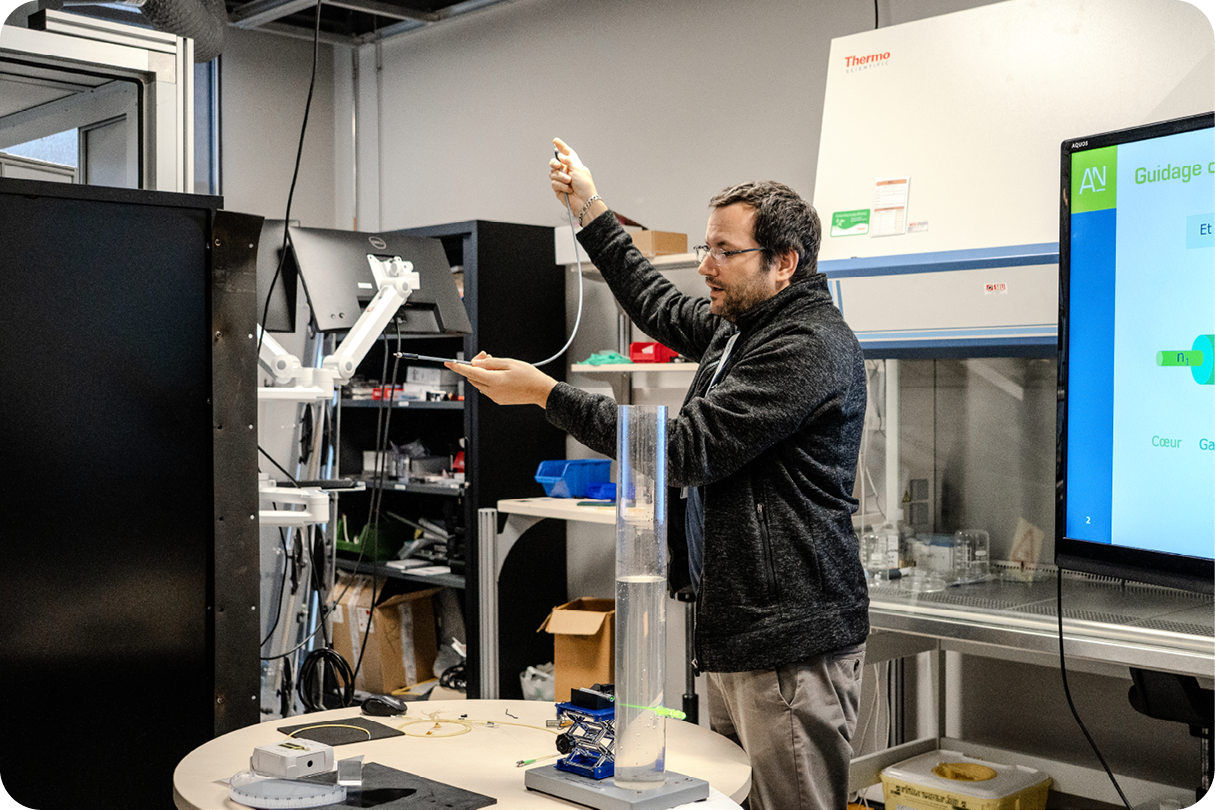
Lasers produce highly directional, highly coherent beams of light. During the visit, participants discovered different lasers technologies, including fiber lasers, solid-state lasers, and nanolasers, along with their applications, particularly in quantum technologies.
|
|
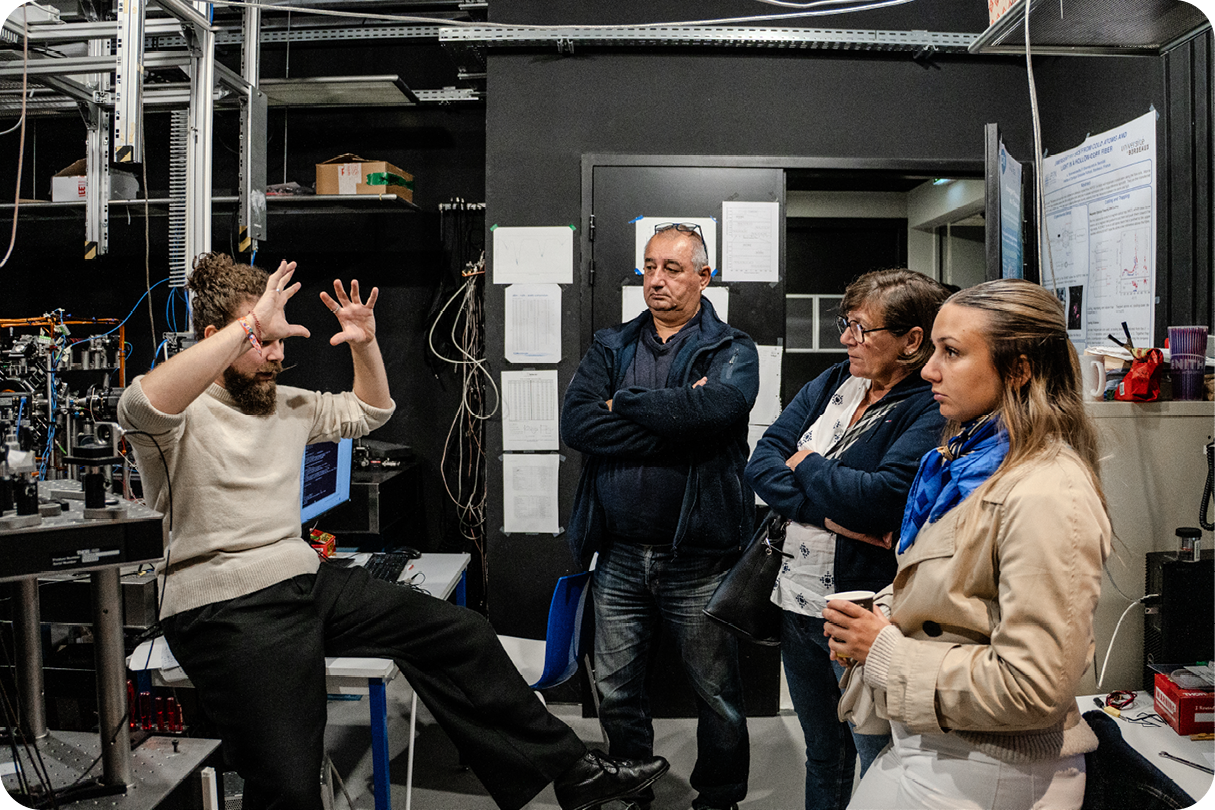
Using a cloud of atoms, along with a set of lasers and magnetic fields, the atomic cloud is cooled while suspended in a vacuum chamber. After a presentation of the experiment, visitors were able to observe the cloud with the naked eye and understand how its temperature, close to absolute zero, is measured using a camera. |
 |
Showcasing local educational opportunities
The event also benefited from the participation of educational and training providers from across Nouvelle-Aquitaine. Programs ranging from vocational high school diplomas to engineering degrees were presented through demonstration booths hosted by the participating institutions, with teachers and students on hand to answer questions.
Student had the opportunity to speak directly with representatives of these programs, explore different educational pathways, and gain a better understanding of career opportunities in the optics and photonics industries.
The following programs and institutions were represented:
- Bac Pro Optique Photonique, Lycée Kastler
- BTS Photonique, Lycée Kastler
- Licence Pro LCM, Université de Bordeaux
- Cycle Ingénieur, IOGS
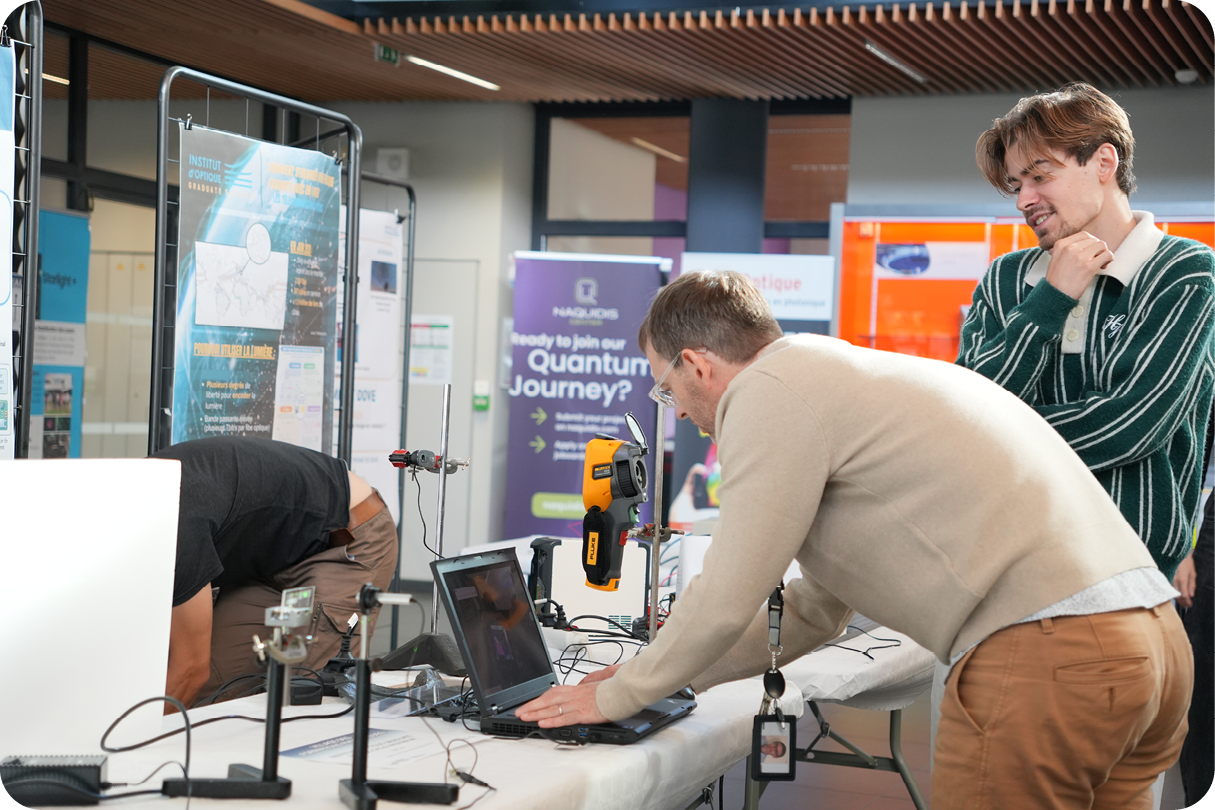
The experience was further enhanced by a virtual reality module offered by the PYLA training center. Visitors had the opportunity to carry out practical exercises in a virtual laboratory, offering another way to explore photonics environments, equipment and tools.
Bringing science to the general public
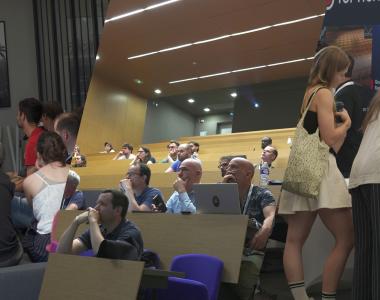
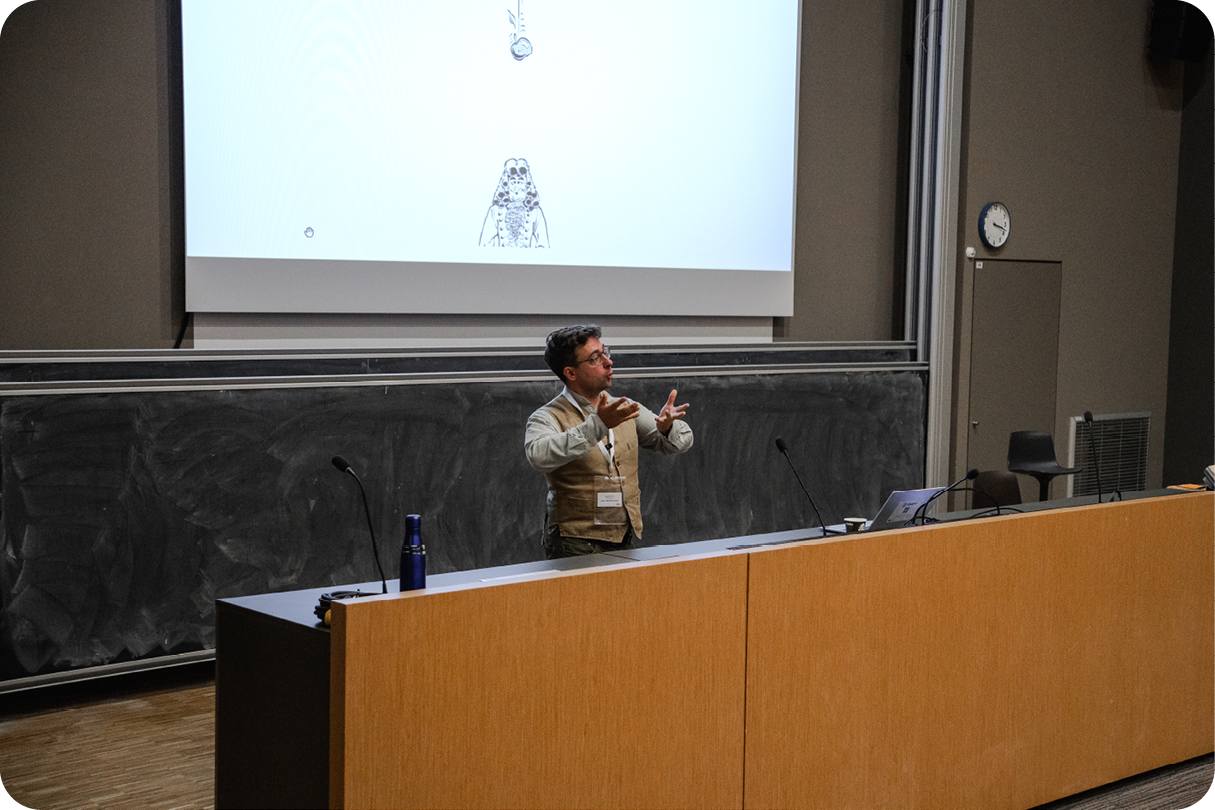 In addition to the open days dedicated to school groups, one day was open to the general public. Visitors were able to take part in the workshops and attend a lecture entitled "What can a quantum sensor installed on top of a volcano reveal?" presented by Jean Lautier-Gaud, physicist and author of "Les dentelles noires de l'Etna".
Through the story of a scientific adventure spanning from Talence to the slopes of Mount Etna, he retraced the key stages of a groundbreaking project: installing a high-precision instrument based on the principles of quantum physics in the extreme conditions of an active volcano. This device makes it possible to study changes in mass deep beneath the volcano's surface and gain further insight into the processes taking place underground. Combining technological challenges, human endeavor, and an unexpected discovery, the lecture highlighted how quantum technologies are opening up new possibilities for observing and better understanding our environment.
With this second edition, the "Inside IOA" Open Days continue to demonstrate their value in bringing the general public, young people, and the scientific community closer together.